Harmonizing Live Soccer Telemetry with Thoroughbred Form Indicators for Strategic Bonus Deployment in Combined Wager Structures
Written by Zara Foster · May 21, 2026
Harmonizing Live Soccer Telemetry with Thoroughbred Form Indicators for Strategic Bonus Deployment in Combined Wager Structures
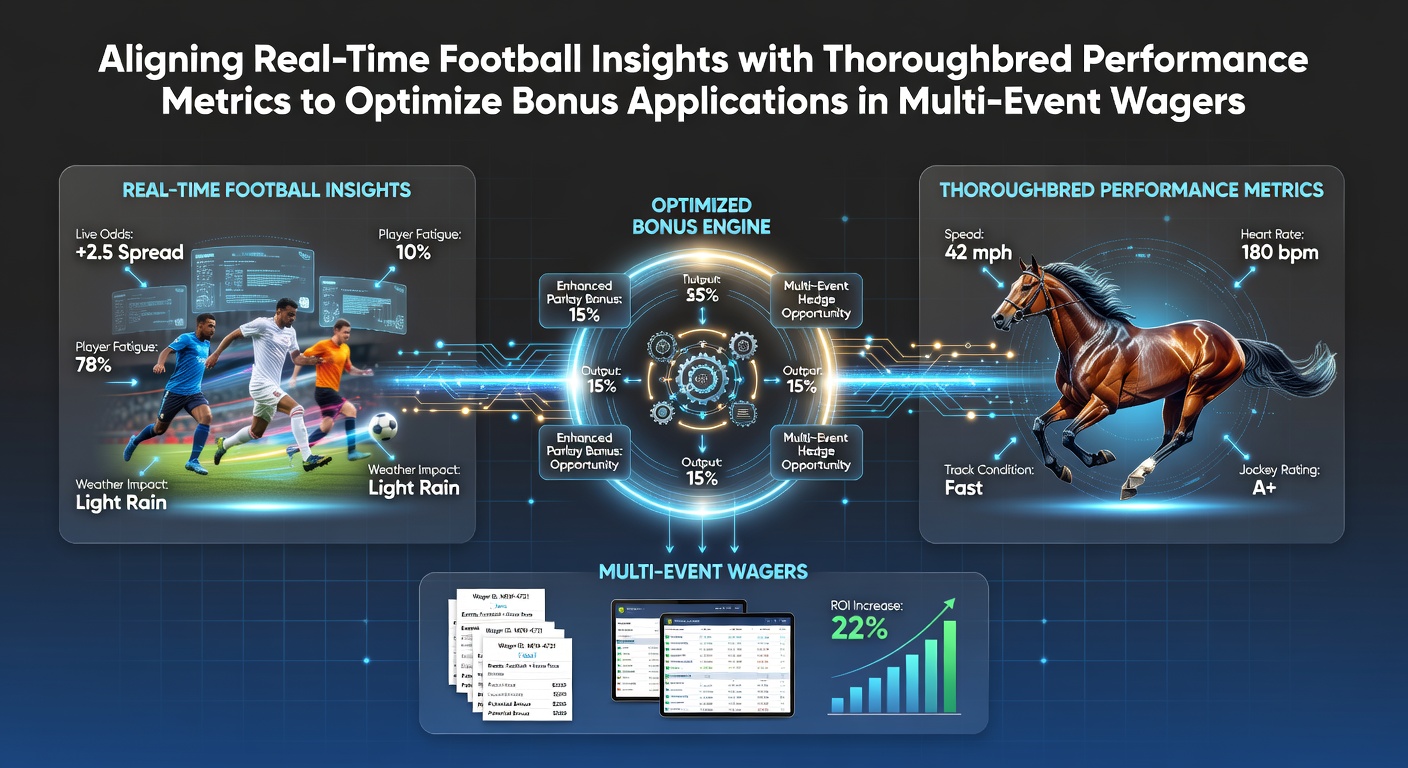
Operators and analysts in the betting sector continue to explore methods that connect instantaneous soccer match data with established thoroughbred performance records, and these approaches aim to improve how promotional incentives apply across multi-event wagers that span both sports. Real-time football insights typically include expected goals values, player tracking outputs, and substitution patterns, while thoroughbred metrics cover sectional times, class ratings, and track variant adjustments; when aligned, the combined dataset supports more precise timing for bonus activation in accumulators and same-game multis.
Data Integration Frameworks in Practice
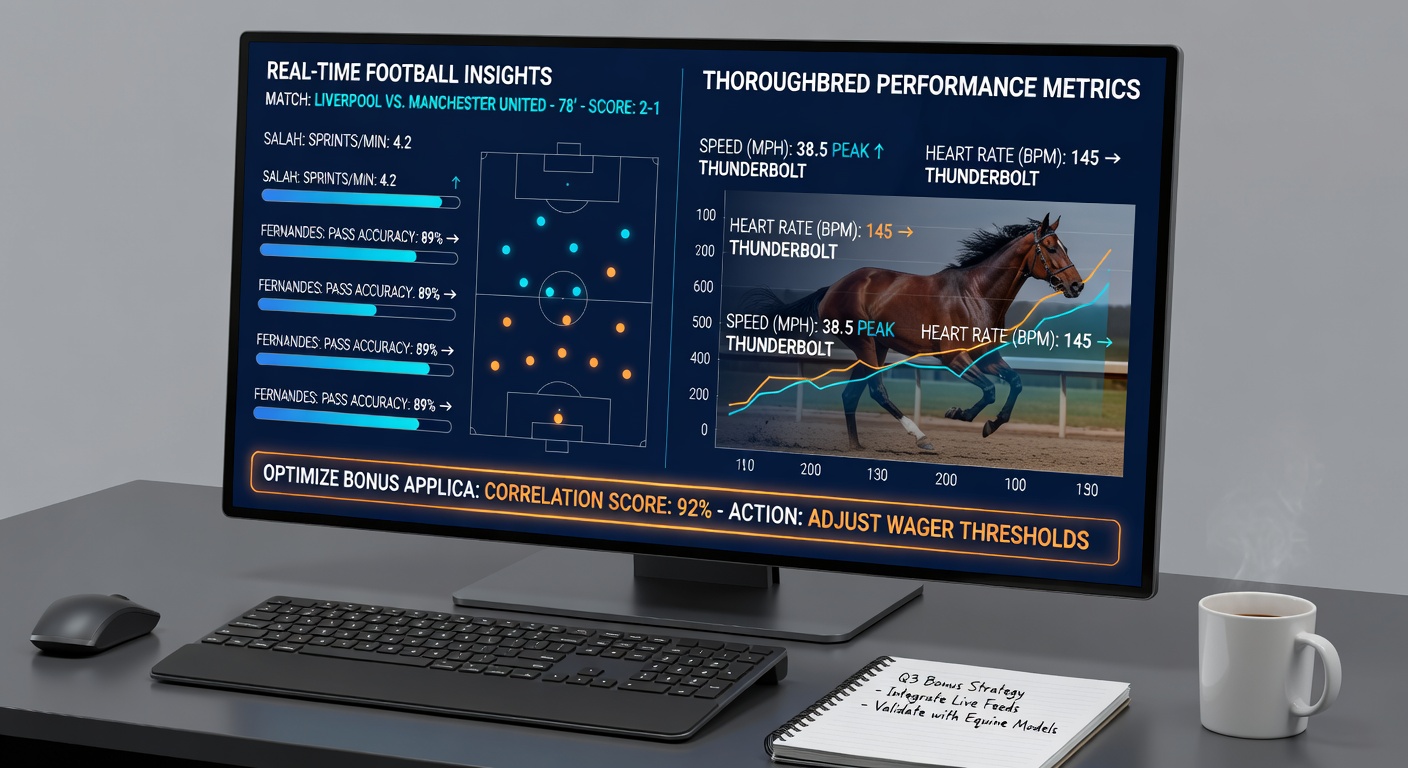
Bookmakers and third-party providers maintain application programming interfaces that pull live soccer statistics directly from stadium feeds, and these same systems cross-reference equine data drawn from timing chips and official racing results services. One common workflow begins with the collection of possession heat maps and pass completion rates from a Premier League fixture, after which algorithms compare those figures against a horse's recent speed ratings from a Group race at Ascot or Newmarket. The process yields a unified probability model that operators use to calibrate enhanced odds or deposit-match promotions before the next leg of a multi-event slip locks in.
Researchers at the University of Las Vegas International Gaming Institute have documented how such merged datasets reduce variance in bonus redemption rates, and their 2025 working paper notes measurable improvements when operators time free-bet triggers to coincide with live momentum shifts in soccer alongside confirmed non-runners in racing fields. Because thoroughbred performance data updates in discrete windows between races, the synchronization requires careful timestamp alignment so that a soccer half-time surge does not inadvertently trigger an equine bonus already expired by the official stewards' declaration.
Optimizing Promotional Mechanics Across Events
Multi-event wagers that combine soccer and thoroughbred selections often carry tiered bonus structures, and these structures reward accurate forecasting of both in-play developments and pre-race adjustments. When live soccer telemetry indicates an uptick in high-value chances created, operators can layer an equine performance metric, such as a horse's historical performance on similar going, to decide whether an existing cash-out offer should convert into an additional stake credit. The result appears in higher engagement metrics reported by several European operators during the 2025-2026 season.
What's interesting is that regulatory calendars influence these mechanics as well. In May 2026 several jurisdictions plan to review advertising guidelines for cross-sport promotions, and industry observers expect clearer definitions around how bonus funds may migrate between football and racing markets without violating spend limits. Data from the European Gaming and Betting Association shows that transparent alignment of real-time and historical metrics helps operators demonstrate compliance during such reviews, because each bonus application traces back to verifiable performance signals rather than discretionary decisions.
Case Examples from Current Market Practice
Take one mid-sized operator that introduced a hybrid accumulator product in early 2026; the product required users to select three soccer legs and two thoroughbred legs, and the bonus multiplier activated only after real-time data confirmed both a soccer clean sheet probability above a set threshold and a thoroughbred's final sectional time within the top quartile of its race. Users who met the criteria received an automatic stake boost on any remaining unsettled legs, and early volume figures indicate steady uptake during Saturday afternoon racing cards that overlapped with Premier League fixtures.
Another example involves a Canadian betting platform that partnered with a data analytics firm to flag scratch notifications alongside soccer injury reports. When a key striker's substitution coincided with a horse's late withdrawal, the system automatically offered a partial bonus refund that could be reapplied to an alternate selection, and this mechanism reduced customer service contacts related to multi-event voids. The approach relies on continuous feeds rather than static pre-match odds, which explains why thoroughbred performance metrics receive equal weighting with live football telemetry in the underlying rules engine.
Technical Considerations for Accurate Alignment
Successful implementations depend on low-latency data pipelines that handle both the continuous stream of soccer event data and the periodic bursts of racing results. Clock synchronization protocols ensure that a goal scored in the 67th minute registers at the same universal timestamp as a horse's official finish time recorded by photo-finish cameras. Without this precision, bonus triggers may activate on stale information, and operators have reported isolated cases where users received duplicate credits because a delayed equine result overlapped with an already settled soccer leg.
Those who've studied these systems note that machine-learning models trained on historical multi-sport datasets improve forecast reliability, and the models typically incorporate variables such as pitch condition updates, weather impacts on track speed, and referee-specific card tendencies. The output feeds directly into promotional engines so that bonus applications remain proportional to the combined strength of the selected legs rather than isolated sport-specific edges.
Conclusion
Aligning real-time soccer insights with thoroughbred performance metrics creates a measurable pathway for operators to refine how bonuses function inside multi-event wagers. The technical requirements center on synchronized data streams, transparent rule engines, and adherence to evolving regulatory expectations, particularly those scheduled for review in May 2026. As more platforms adopt these integrated approaches, the sector gains clearer benchmarks for evaluating both promotional effectiveness and cross-sport risk management.