Echoes from the Felt: How Blackjack Probabilities Inform In-Play Football and Horse Racing Strategies
Written by Jordan Carter · Jun 14, 2026
Echoes from the Felt: How Blackjack Probabilities Inform In-Play Football and Horse Racing Strategies
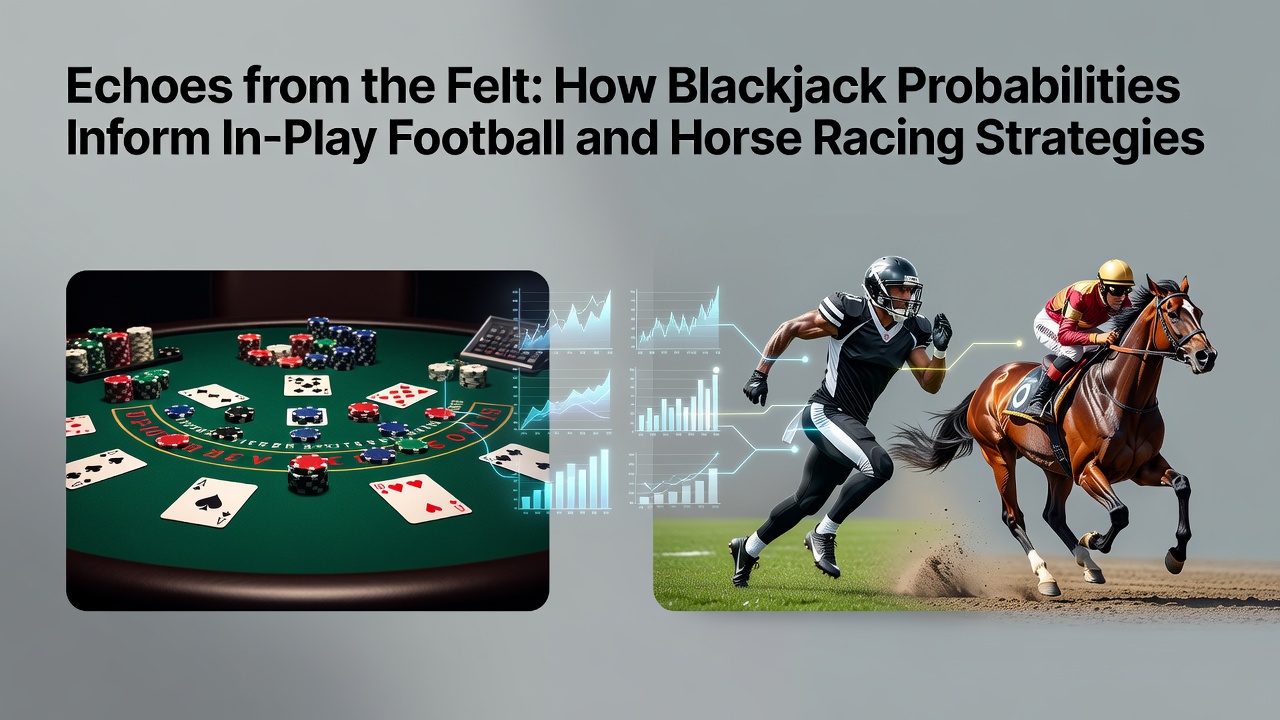
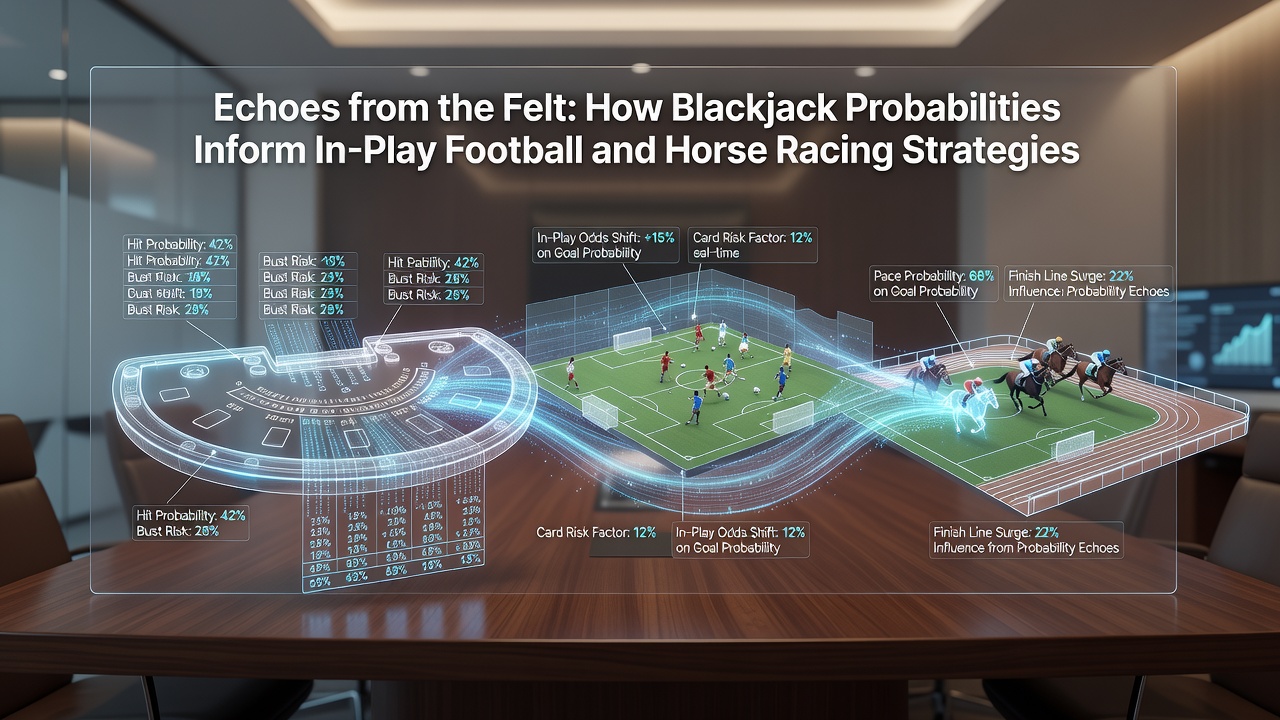
Blackjack strategies rely on tracking remaining cards to adjust decisions in real time, and observers note that similar probability updates drive in-play betting adjustments during football matches and horse races. Researchers have examined how expected value calculations from card games transfer to live sports environments where odds shift with each event. Data from multiple jurisdictions shows that bettors apply conditional probability models to reassess outcomes after goals, red cards, or pace changes at the track.
Core Probability Mechanics in Blackjack
Standard blackjack play involves calculating the likelihood of drawing specific cards based on the composition of the remaining deck, and studies from the University of Nevada Las Vegas highlight how basic strategy charts reduce the house edge to under 0.5 percent when followed precisely. Card counting systems assign values to dealt cards so that players can estimate the ratio of high to low cards left in the shoe, which directly influences betting sizes and hit-or-stand choices. Those who track these ratios adjust wagers when the count turns positive because the probability of favorable hands increases measurably.
Expected value formulas in blackjack incorporate both immediate outcomes and future deck states, allowing continuous recalculation after every hand. Analysts compare this process to live odds engines that update probabilities with each new piece of information during a match or race.
Transferring Concepts to In-Play Football
Football in-play markets operate on dynamic probability models that mirror deck-composition tracking because every goal, substitution, or disciplinary action alters the distribution of possible final scores. Live betting platforms recalculate implied probabilities from updated scorelines and time remaining, much like a blackjack player revises the count after each card is revealed. Research published by the Canadian Centre on Substance Use and Addiction has documented how bettors who apply conditional probability frameworks achieve steadier returns when they treat each match segment as a new information state rather than an isolated event.
One documented pattern involves monitoring possession and shot metrics to estimate remaining goal expectancy, which functions similarly to estimating the value of the next card in a favorable count. When a team falls behind late, the probability distribution shifts toward higher-scoring outcomes, prompting bettors to reassess over/under lines in the same manner that a rising count prompts larger wagers on player blackjack hands.
Application to Horse Racing Markets
Horse racing in-play betting updates probabilities based on pace fractions, position changes, and track conditions, creating an environment where prior form data combines with live observations to revise win chances. Observers have recorded that fractional odds shift rapidly when a horse moves from mid-pack to the lead, paralleling the way a blackjack player increases stakes once high cards remain in greater proportion. Industry reports from the Australian Gambling Research Centre indicate that bettors who model these updates as sequential probability revisions maintain more consistent bankroll management across multiple races on the same card.
Place and show markets provide additional layers because payouts depend on finishing positions rather than outright winners, requiring bettors to calculate joint probabilities for multiple outcomes simultaneously. This multi-outcome framework resembles the combinatorial calculations used in blackjack when evaluating insurance bets or splitting pairs against a dealer’s upcard.
Shared Decision Frameworks Across Domains
Both football and horse racing bettors benefit from treating each new data point as an independent update to a prior probability distribution, a technique refined over decades in casino card rooms. Figures from the Nevada Gaming Control Board show that operators monitor similar real-time adjustments in sports books to maintain balanced liability across correlated markets. Bettors who internalize this approach avoid overreacting to single events by maintaining running tallies of relevant variables such as shots on target or sectional times.
June 2026 data releases from several international gaming authorities continue to track how these probability-based methods appear in regulatory filings for in-play product offerings, confirming that the underlying mathematics remain consistent regardless of jurisdiction.
Conclusion
Probability concepts developed for blackjack provide structured methods for revising expectations as new information arrives during football matches and horse races. Operators and bettors alike apply these sequential updates to manage risk across live markets, and ongoing research from academic and regulatory sources continues to map the exact parallels between card-game mathematics and in-play sports outcomes. The transfer of these analytical tools remains evident in how odds engines and individual decision processes respond to unfolding events on the pitch and the track.