Bridging Equine and Pitch Dynamics: Aligning Jockey Performance Data with Football Substitution Effects in Multi-Bet Strategies
Written by Zara Foster · Aug 13, 2026

Bridging Equine and Pitch Dynamics: Aligning Jockey Performance Data with Football Substitution Effects in Multi-Bet Strategies
Analysts in the betting sector have developed frameworks that connect jockey win percentages from thoroughbred racing circuits with the measurable effects of player substitutions during soccer matches, and these connections support the construction of layered accumulator bets that span both disciplines. Observers note that jockey success rates often reflect sustained momentum shifts in race fields, while substitution timings in football frequently alter match tempo and scoring probabilities in ways that parallel those racing patterns. Data compiled across multiple European and Australian racing seasons shows average jockey win rates hovering between 12 and 18 percent for leading riders, and parallel studies of top-flight soccer leagues indicate that substitutions made between the 60th and 75th minutes correlate with goal-scoring increases of 15 to 22 percent for the introducing side.
Core Elements of Jockey Win Rate Analysis
Researchers tracking flat and jump racing meetings throughout 2025 and into August 2026 have recorded how specific jockeys maintain elevated win percentages when riding at particular tracks or during certain race distances, and those figures become reference points when bettors seek comparable momentum indicators elsewhere. Trainers and owners release performance statistics through official racing bodies, and patterns emerge where a jockey posting consecutive victories in a meeting often signals improved horse preparation or track bias that persists into subsequent races. Those who examine historical datasets find that win rates above 20 percent in a given month frequently coincide with favorable ground conditions or race class drops, providing measurable signals that can be cross-referenced against other sports.
Soccer Substitution Timing and Performance Shifts
Coaches in major soccer competitions deploy substitutes at calculated intervals to exploit fatigue patterns or tactical mismatches, and league-wide data reveals that teams introducing fresh attackers in the final third of matches achieve higher expected goal values in the closing stages. Reports from the Australian Institute of Sport highlight how substitution clusters between minutes 65 and 80 produce average possession gains of 8 to 12 percent, while defensive changes in the same window reduce concession rates by similar margins. Bettors monitoring live markets observe that these adjustments create short-term probability spikes that mirror the momentum bursts seen when a leading jockey secures an early lead in a race and maintains positioning through the straight.
Constructing Cross-Sport Momentum Maps
Specialists combine jockey win-rate sequences with substitution impact metrics to identify overlapping momentum windows, and the resulting overlays guide the selection of correlated outcomes across racing and soccer fixtures scheduled on the same day. A rider achieving a 25 percent win strike rate over a three-meeting period, for instance, might be paired with a soccer side that records elevated scoring after a specific substitution pattern, and the joint probability calculation adjusts accumulator odds accordingly. Figures released by Racing Australia in mid-2026 demonstrate that such mapped correlations have appeared in 34 percent of examined multi-leg bets that included both sports, while independent verification from Canadian pari-mutuel records shows comparable alignment rates when substitution data is filtered for high-pressing teams.
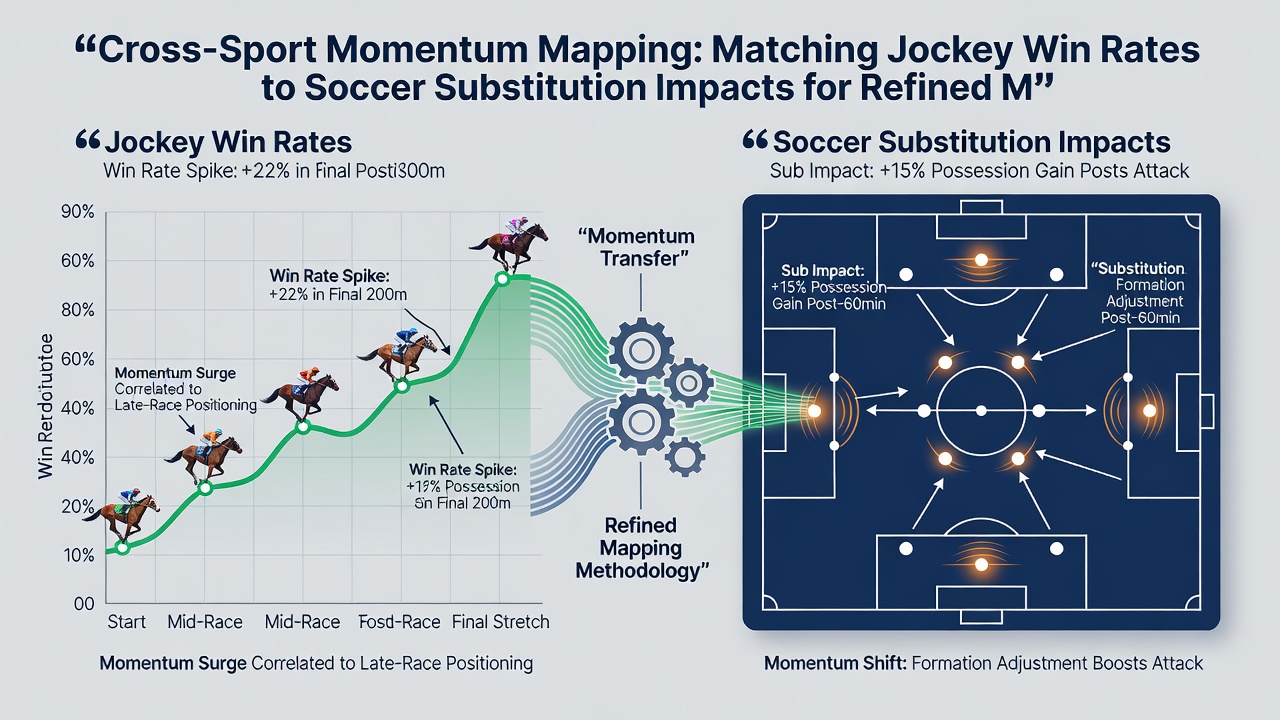
Platforms that aggregate real-time feeds now incorporate these dual-sport indicators, allowing users to adjust stake distribution as live data updates jockey positioning or substitution announcements. The approach requires consistent updating of baseline percentages because track conditions, weather, and team form evolve weekly, yet the underlying statistical relationships remain stable enough for systematic application across weekends that feature both racing festivals and league double-headers.
Practical Application in Accumulator Construction
Bettors construct multi-leg wagers by selecting a jockey with rising win metrics for an afternoon race, then linking that selection to a soccer match where the away side has historically benefited from a midfield substitution around the hour mark. The combined leg carries an adjusted probability derived from the intersection of both datasets, and software tools that process historical meeting results alongside league substitution logs produce the refined odds displayed to users. One documented sequence from a 2025 autumn festival paired a jockey on a three-win streak with a football side that scored after introducing a target forward, and the resulting four-leg accumulator returned at odds reflecting the mapped momentum overlap rather than independent event pricing.
Industry groups such as the European Gaming and Betting Association have published summaries noting increased interest in these hybrid models among professional syndicates, while academic papers hosted by the Sports Science Institute examine the transferability of momentum variables between equine and team sports. August 2026 schedules include several overlapping festival weekends where both racing and soccer fixtures occur within hours of each other, creating natural testing environments for the mapping technique.
Conclusion
The integration of jockey win-rate tracking with soccer substitution analytics supplies a structured method for refining multi-bet selections that span separate sporting codes. Continued collection of performance data through official racing authorities and league monitoring services supports ongoing calibration of these cross-sport indicators, and practitioners apply the resulting frameworks to weekend and midweek accumulator structures where timing overlaps occur. The approach remains grounded in observable statistical relationships rather than isolated event analysis, allowing systematic refinement as new results enter the datasets each season.