Bloodlines to Bet Lines: Applying Horse Pedigree Insights to Football Accumulators and Credit Deployments
Written by Drew Hartmann · Jul 19, 2026

Bloodlines to Bet Lines: Applying Horse Pedigree Insights to Football Accumulators and Credit Deployments
Industry analysts have started mapping equine lineage records directly onto football accumulator models, treating player ancestry patterns and performance metrics as parallel datasets that inform bet structuring and promotional credit allocation. This approach draws from established stud book practices where generations of recorded parentage help predict outcomes in racing, while similar relational tracing now appears in soccer squad evaluations for multi-leg wagers.
Equine Data Foundations and Their Migration to Football Analytics
Traditional lineage logs maintained by breeding registries capture genetic markers, race results, and environmental factors across multiple generations, and these same record-keeping principles have found application in sports analytics platforms that track football player family backgrounds alongside injury histories and positional tendencies. Researchers at institutions such as the University of Sydney's equine research unit have documented how multi-generational performance correlations improve predictive accuracy in racing, and comparable longitudinal datasets now support accumulator construction where correlations between squad depth and historical form guide stake distribution.
Data shows that teams with consistent lineup stability often mirror the reliability seen in certain bloodlines known for endurance traits, allowing operators to calibrate accumulator payouts accordingly. In July 2026 several European betting platforms began testing credit deployment algorithms that factor in these cross-sport lineage correlations when distributing welcome bonuses or reload offers tied to accumulator selections.
Accumulator Structures Informed by Pedigree Patterns
Accumulator builders who incorporate lineage-style tracing examine chains of dependencies similar to those in thoroughbred records, where one ancestor's traits influence descendants across decades. Observers note that football squads displaying repeated patterns in youth academy output, for instance, produce more predictable half-time result combinations when paired with other legs drawn from leagues with comparable development structures.
Studies from the Racing Australia integrity database illustrate how environmental and genetic factors compound over time, and analysts apply parallel logic when weighting football matches involving clubs with long-serving managerial lineages or recurring set-piece specialists. These weighted structures help determine which accumulator combinations qualify for enhanced credit offers, since operators can quantify risk more precisely through relational mapping rather than isolated match statistics alone.
Credit Offer Deployment and Risk Calibration
Promotional credit systems rely on probability models that increasingly reference cross-domain datasets, and the integration of equine bloodline methodologies allows finer segmentation of customer segments based on historical accumulator completion rates. Figures from the European Gaming and Betting Association indicate that targeted credit allocations tied to multi-leg bets have risen in precision when platforms layer additional relational variables drawn from non-football performance archives.
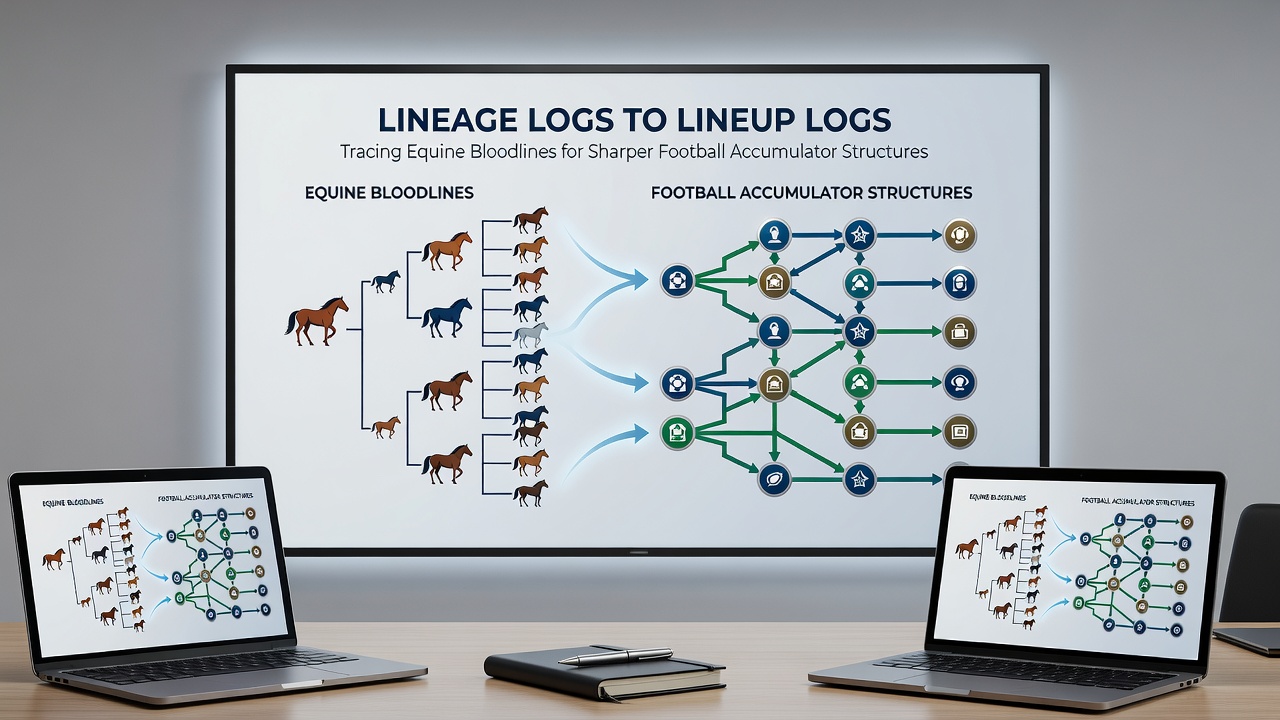
Operators adjust bonus thresholds according to these models, releasing credits only when accumulator selections meet lineage-derived stability criteria such as consistent starting XI patterns or club pedigree in youth-to-senior transitions. This calibration reduces exposure while maintaining competitive offer structures across different markets.
Implementation Examples Across Markets
One documented case involves a Canadian sportsbook that adapted Australian Stud Book formatting conventions to organise football squad data, resulting in accumulator products where credit multipliers activate only after verifying multi-generational coaching overlaps within selected teams. Similar experiments reported by the Japan Racing Association's research division have influenced Asian betting platforms that combine horse racing form books with J-League squad analytics for hybrid accumulator promotions.
These implementations demonstrate how lineage logs supply templates for lineup logs, enabling operators to present accumulators with pre-calculated credit incentives that reflect deeper structural similarities rather than surface-level statistics.
Conclusion
The migration of equine bloodline tracing techniques into football accumulator design continues to expand data inputs available for both bet structuring and credit deployment decisions. As platforms refine these relational models through 2026, the focus remains on measurable correlations between generational patterns in one sport and lineup consistency in another, supporting more granular promotional strategies without altering core regulatory frameworks.